THE DARIEN GAP:
A Prolonged Moment of Contact
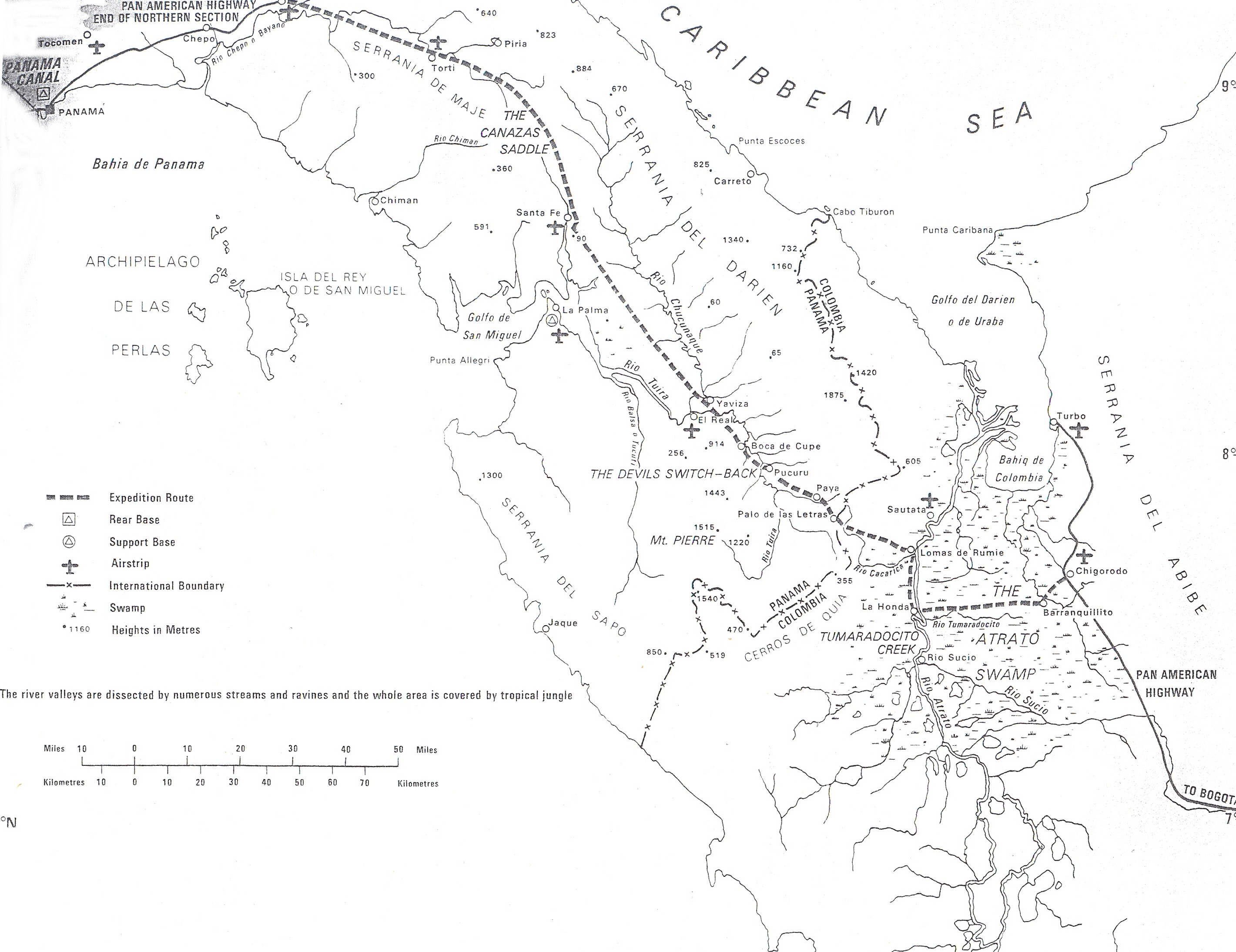
Contact is an evocative term. As the dictionary meaning, it translates to "the state or condition of physical touching", "the state or condition of communicating or meeting". As a euphemism, on the other hand, it is largely used to describe the encounter of Europeans with the Natives. It becomes saturated with meanings and narratives and refers to that particular moment of "coming into contact", followed by conquest and destruction. The temporality that it suggests, manifests a sense of anticipation and tension, as it marks a very critical, and yet a very transient moment that drastically defines "the before" and "the after". It is the moment of negotiation and recognition and it reconfigures the power relations as well as the distribution of the sensibles. The Darien Gap, with its very particular context, presents an example where this moment of contact is somehow prolonged.

The Darien Gap is vast territory of rainforests extending along the continental divide between Panama and Colombia. As a World Heritage Site and Biosphere Reserve, it houses some of the highest levels of diversity of both flora and fauna, as well as indigenous groups such as the Kunas, Embera Woonaans and Afrochocoanas. It is an important natural barrier between the Central and the South America, or a "seal" as its Spanish name suggests, which plays a crucial role in the protection of different continental faunas and prevents the transmission of different diseases.
The Darien Gap is also the last missing link in the Pan-American Highway that is supposed to connect Alaska to Patagonia, as a hemispheric vision first proposed in 1923 to enhance global trade and cultural exchange. The 107 km long gap and its completion has been on debate since the early days of the proposal, when first challenged by the rebellion of the Kuna people and the recognition of their territorial autonomy in 1945. Since then, the opening of the Darien Gap was seen as an "impending reality" by the US and proponents of the completion of the highway, while being constantly challenged by the environmentalists/human right advocacy groups including the Indigenous Pan-American Highway Commission (IPAHC).


For more information on The Indigenous Pan-American Highway Commission (IPAHC), click here.